| Availability: | |
|---|---|
| Quantity: | |

Product information
| Name | High temperature solder bar | Brand | Singway |
Model NO. | 8812 | Material | Sn88Sb12 |
Melting Point | 260±2℃ | Individual strip weight | About 0.72kg/ piece |
Shape | Strip, stick | thickness | 21mm |
width | 13mm | length | 331mm |
Packaging | 20kg/box | Origin | China |
Product Description
The high temperature resistant solder bars produced by singwei Company are manufactured under strict quality control conditions, using high purity Yunnan pure tin raw materials, refined by vacuum deoxidation treatment and casting process. The following are the outstanding characteristics of the solder bar:
The first high-purity Yunnan pure tin raw materials: We choose high-purity Yunnan pure tin raw materials to ensure the purity and quality of the solder bar, and reduce the content of oxidation and impurities.
The second vacuum deoxidation treatment: the solder strip is subjected to vacuum deoxidation treatment, which effectively reduces the oxygen content, reduces the oxidation reaction, and ensures the stable quality of the solder joint during welding.
Third high melting point tin-antimony alloy: Our solder bars use a unique formula of tin-antimony alloy, which has a higher melting point than most of the lead-free solders currently used by customers, and are suitable for the component industry where high melting point resistance is required.
Fourth, high temperature resistance: the solder bar has excellent high temperature resistance and is suitable for working in high temperature environments to ensure the reliability of welding connections.
Fifth wide application: It is suitable for electronic components, circuit boards and other high-temperature applications requiring high melting point welding.
Product Specifications
Model NO. | Ingredient (WT%) | Melting Point(℃) | Application |
995 | Sn99.3Cu0.7 | 227 | High temperature solder, suitable for copper enamelled wire one-time detinning tin and high temperature element foot tin. |
8812 | Sn88Sb12 | 260 | Lead-free solder high melting point of high temperature tin bar, suitable for high melting point demand components industry. |
| EB9010 | Sn42Bi58 | Lead-free low temperature solder, designed for customers with low temperature operation low temperature fuse protection and other soldering process. |
Metod of application
![]() | Addition of new tin strip in wave soldering: |
| During the wave crest welding process, the amount of tin will continue to decrease, when it is reduced to a certain extent, a new solder strip/tin strip should be added in time to maintain the liquid level of tin and to increase the oxidation of tin due to the large tin wave drop. |
![]() | Removal of scum in wave soldering: |
Scum is an oxide that forms on the surface of the solder, and the rate at which it is produced is dependent on temperature and agitation. The higher the temperature is, the larger the gauge flow on the solder surface and the more scum formed. Antioxidants can also be added to form a protective film on the tin surface to reduce tin oxidation. The oxide on the solder surface prevents the solder from being reoxidized, so it is not necessary to remove scum frequently. As long as it doesn't affect the waves Push. Just clean it out once a day. It is also possible to push the tin slag to a corner, add reducing powder to the tin slag and stir again to reduce most of the tin slag to tin. |
Product Features

High-melting-point

Tin antimony alloy ratio

Good mobility

Solid solder joint

Quick on the tin

Low tin slag

Hight temperature resistance 260℃

High reliability


Hey, let’s talk about high-temp solder wire—you know, the stuff that doesn’t melt when things get hot? Regular solder wires melt too easy, right? Like that common 8812 one, it only handles 250-280°C. But when you’re packaging chips, you gotta bake ’em multiple times at high temps. Conventional lead-
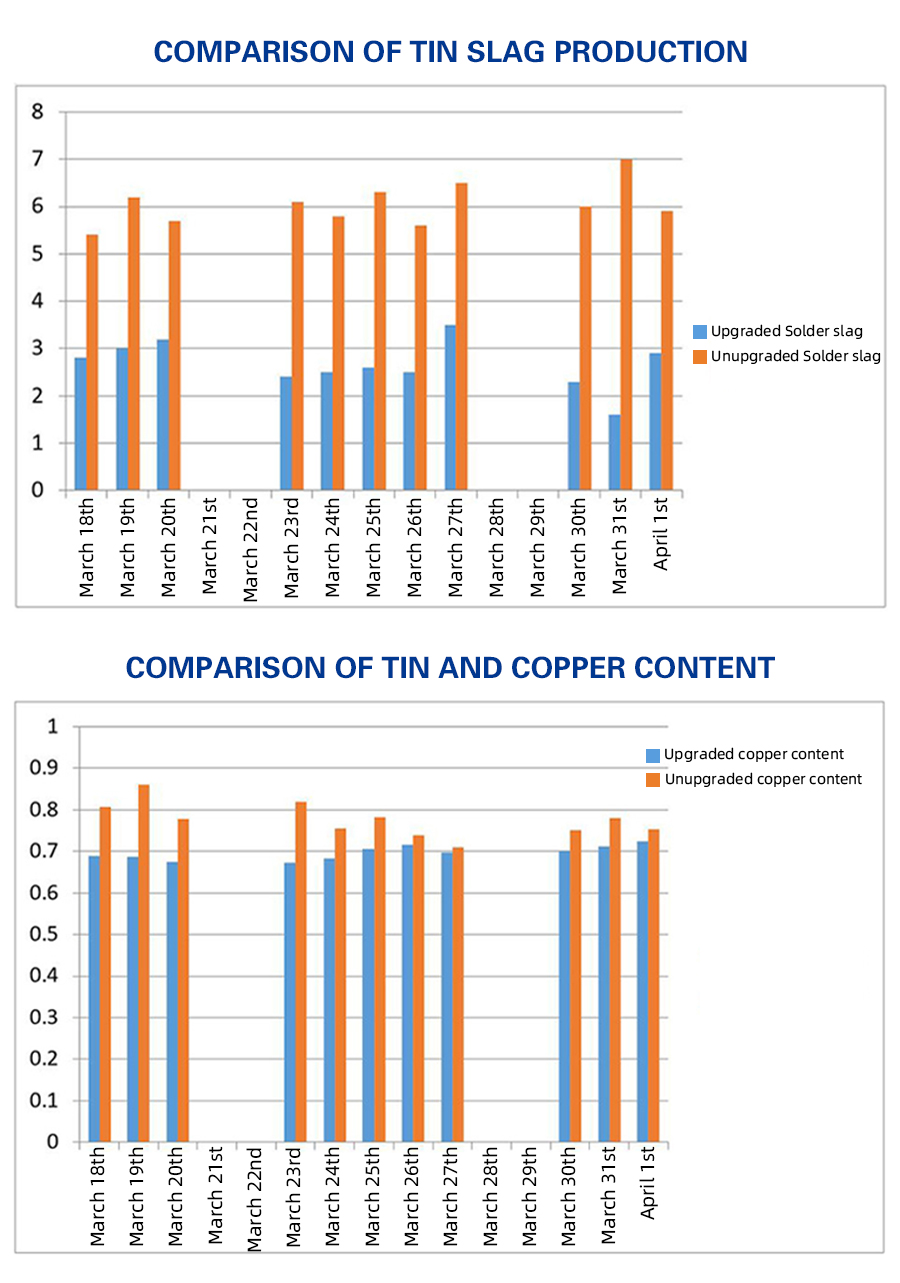
During wave soldering, dip soldering, and other soldering processes, excessive dross on the solder pot surface not only increases solder bar consumption costs but also leads to solder joint inclusions, cold joints, poor soldering quality, and even reduced overall production line efficiency. This iss
Reliable Solder Wire ManufacturersAs electronic products continue to evolve toward higher density, miniaturization, and enhanced reliability, solder wire has increasingly become a critical base material affecting product dependability. In response to stringent environmental regulations, lead-free co
High-Temperature Soldering ApplicationsHigh-temperature solder is widely used in secondary reflow soldering, step soldering processes, power device packaging, and new energy connector assembly. Among these applications, secondary reflow solder wire is one of the most common.In electronic manufacturi
Spattering, and Poor Wetting?Solder Wire ApplicationsIn PCB assembly, SMT rework, and automatic soldering machine operations, many manufacturers encounter common soldering issues such as excessive smoke, solder spattering, poor wetting, dark solder joints, and cold solder joints. Whether using lead-
Lead-Free Solder Wire for Automatic Soldering Machines Companies using automatic soldering machines for batch soldering often find that even with the same machine and identical program parameters, the soldering results vary significantly. Some achieve full, shiny solder joints with high first-pass y